

SOUTH CAROLINA LEGAL GUIDE
Can a Private Investigator Record Conversations in South Carolina?
South Carolina law checked General information, not legal advice
Yes, in some situations. Under S.C. Code § 17-30-30(C), a private person, including a private investigator, may record a conversation if they are taking part in it or if one of the people in the conversation agreed to the recording beforehand. A PI license adds no special recording power, and privacy, location, and how the recording will be used can still change the answer.
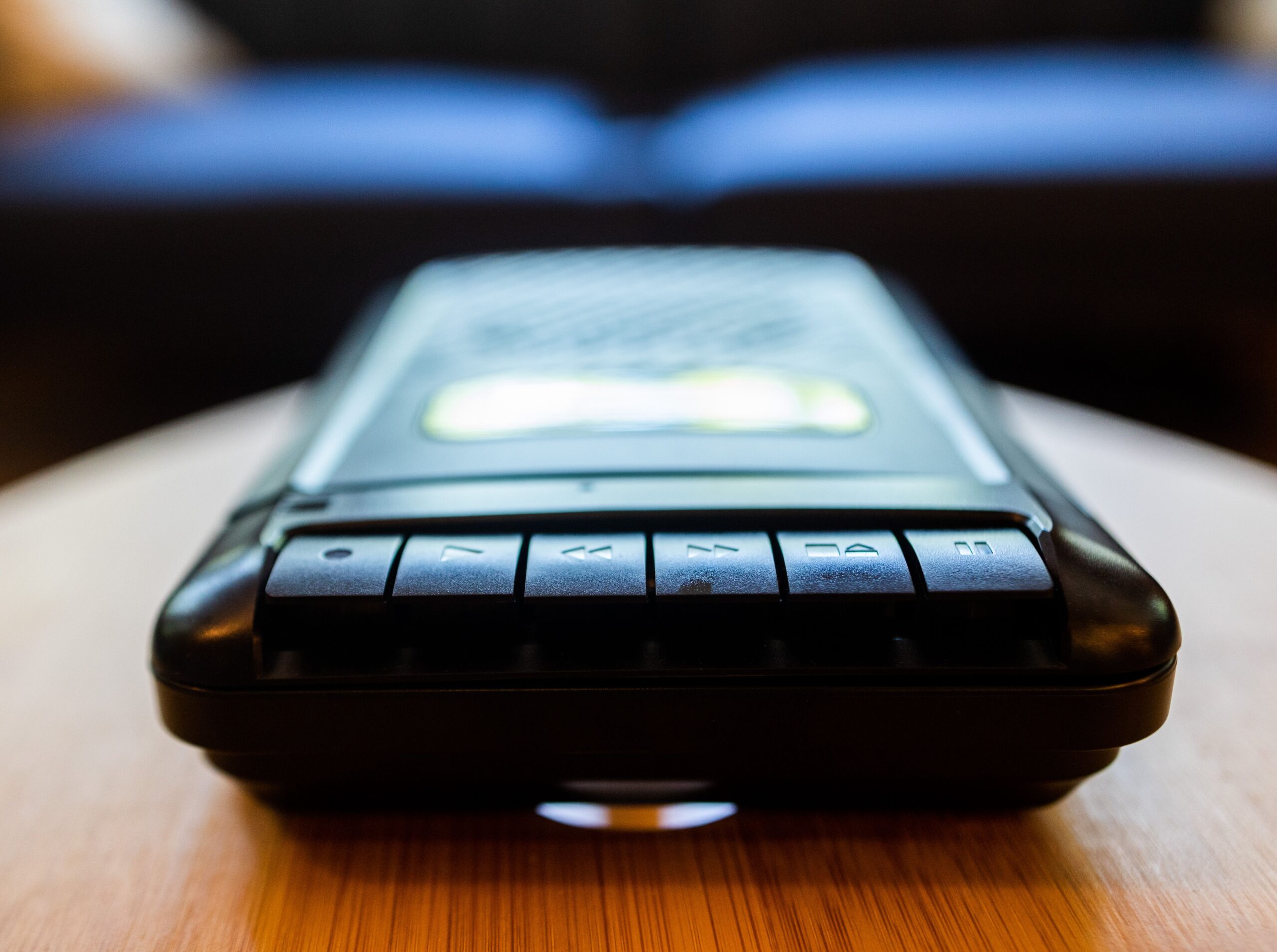
The familiar “one-party consent” label only gets you partway there. The real answer depends on three facts: who is making the recording, who is actually part of the conversation, and whether any participant agreed before the recording started.
What “One-Party Consent” Actually Means in South Carolina
South Carolina’s wiretap law makes it a felony to intentionally intercept a wire, oral, or electronic communication unless the law specifically allows it (§ 17-30-20). “Intercept” is the statute’s word for capturing what someone says with a device, whether that’s a phone call, a face-to-face conversation, or an electronic message.
The exception people usually mean when they say “one-party consent” is § 17-30-30(C). It applies to anyone not acting on behalf of the government, and it contains two separate paths. A recording is allowed when:
- the person recording is a party to the communication, or
- one of the parties to the communication gave prior consent to the recording.
Most online summaries stop at the first path. The second gets far less attention, even though it’s the path that can apply when the person holding the recorder isn’t part of the conversation at all.
Who counts as a “party”?
A party is someone taking part in the conversation: a person speaking or being spoken to. It doesn’t mean a party to a lawsuit, the person who hired the investigator, or anyone with a strong interest in what’s being said.
That distinction trips people up. A spouse who suspects an affair is not a party to a phone call between their husband or wife and someone else, even if that call sits at the center of a divorce. If the spouse isn’t on the call, their permission doesn’t supply the consent the statute requires. Anyone considering an adultery investigation in South Carolina should understand that before recording calls ever comes up.
What “prior consent” means when the recorder isn’t in the conversation
Prior consent means a participant agreed to the recording before it began. When that participant is the one who asks an investigator to record, the investigator can stay out of the conversation and still fit within § 17-30-30(C), because the consent comes from someone who is actually in it.
That’s a very different situation from an investigator secretly capturing a conversation between two people when neither of them agreed. There’s no consent path under § 17-30-30(C) for that at all.
How the Rule Applies When a Private Investigator Is Recording
Lining the statute up against real investigative roles makes the picture clearer. Use this table as a starting point for sorting out a situation, not as a ruling on anyone’s specific facts.
| Situation | Consent path under § 17-30-30(C)? | What can still change the answer |
|---|---|---|
| The PI is one of the people in the conversation, in person or on a call | Yes. The PI is a party. | Where the other person is located, the purpose of the recording, and how it will be used |
| The PI isn’t in the conversation, but a participant agreed beforehand | Yes. A party gave prior consent. | Whether the consenting person really is a participant, where the conversation happens, and whether a minor or another state is involved |
| The client consents, but the client isn’t in the conversation | No. The client isn’t a party. | Hiring an investigator doesn’t make the client a participant in other people’s conversations |
| No one in the conversation consented, such as a recorder left in a room | No. | This is the situation one-party consent does not cover |
| A parent consents on behalf of a minor child who is in the conversation | Possibly, in narrow cases (State v. Whitner) | Whether the parent had a good-faith, objectively reasonable belief that it was necessary and in the child’s best interest |
When the investigator is part of the conversation
If a PI speaks with someone directly, such as in an interview, on a phone call, or in a conversation where the investigator is present, the PI is a party and the first path in § 17-30-30(C) applies. Federal law has a similar participant rule with one added limit: it doesn’t protect a recording made for the purpose of committing a crime or a tort, meaning a civil wrong someone can sue over (18 U.S.C. § 2511(2)(d)).
Being a participant answers the consent question. It doesn’t settle the other issues covered below, such as where the other person is located or how the recording can be used later.
When a participant consents but the investigator isn’t in the conversation
Some PI-focused content says an investigator must personally take part in any conversation they record. The statute’s current text is broader: it also allows interception when “one of the parties to the communication has given prior consent.”
The key word is parties. A client can supply that consent only for conversations the client is actually part of. This is also the part of the law that pending legislation would change, as explained later in this guide.
When no one in the conversation consented
If the investigator isn’t a participant and no participant agreed in advance, § 17-30-30(C) doesn’t authorize the recording. A hidden recorder left behind to pick up other people’s conversations falls into this category. Whether a particular conversation is legally protected still depends on the circumstances, as the next section explains, but “South Carolina is a one-party state” is no defense here. There is no consenting party.
A PI license doesn’t change that. South Carolina licenses and regulates private investigators through the State Law Enforcement Division (SLED) under Title 40, Chapter 18, and that license doesn’t by itself authorize an interception the statute otherwise prohibits. Court-ordered wiretaps under § 17-30-70 are a separate process: SLED’s chief initiates the application, the Attorney General’s office approves it, and a designated circuit judge decides it. That process is available only for a short list of serious crimes.
When recording isn’t an option, other lawful methods like surveillance, interviews, and records research may still document what you need. Bulldog PI’s investigators work throughout South Carolina and can talk through which methods fit your situation.
Does It Matter If the Conversation Happens in Public?
It matters, but “public” isn’t the test the statute uses. For in-person conversations, South Carolina protects an “oral communication” spoken by someone who expects it won’t be intercepted, under circumstances that justify that expectation (§ 17-30-15(2)). The definition specifically excludes public remarks made at a public meeting.
So location is part of the picture, not the whole answer. The real question is whether the speaker’s expectation of privacy was justified in that setting. That depends on the circumstances, including where the conversation took place and who else could reasonably overhear it.
Phone calls work differently. A call is a “wire communication” under the statute, a separately defined category that doesn’t rely on the privacy-expectation language used for in-person conversations.
PUBLIC ISN’T A FREE PASS
A visible location doesn’t automatically strip a conversation of legal protection, and a private location doesn’t automatically create it. “Public” is not a magic word.
Audio Recording and Video Surveillance Are Separate Legal Questions
Much of what investigators do is visual: watching, photographing, and filming activity. South Carolina handles that under different laws than audio recording, and the rules for one don’t carry over to the other.
| What’s being done | Main South Carolina law | How it applies to a PI |
|---|---|---|
| Capturing the contents of a conversation (audio) | Title 17, Chapter 30, including §§ 17-30-20 and 17-30-30 | Consent rules apply to a licensed PI the same way they apply to anyone else. |
| Eavesdropping or “peeping” on or around someone else’s premises, including with video or audio equipment | § 16-17-470(A) | Doesn’t apply to private investigators conducting surveillance in the ordinary course of business (§ 16-17-470(E)(4)). |
| Voyeurism, and selling or distributing voyeuristic images or recordings | § 16-17-470(B) and (C) | The PI exception in subsection (E) is written for subsection (A) only. |
| Intruding into someone’s private affairs | Privacy claim recognized in Snakenberg v. Hartford Casualty Insurance Co. | A civil lawsuit can arise even when no criminal statute was broken. |
The PI exception in § 16-17-470(E)(4) is real, but it’s narrow. It lifts one eavesdropping and peeping-tom provision for ordinary-course surveillance. It doesn’t touch the interception statute, so it can’t turn a nonconsensual audio recording into a lawful one.
Situations That Call for a Lawyer’s Input
In some situations, too much depends on the specific facts for a general rule to be a safe basis for recording. If yours involves one of these, talk with a South Carolina attorney before anyone presses record.
Calls or conversations that cross state lines
A phone call can connect people in two states with different consent laws, and federal law applies on top of both. Federal law permits recording by a participant or with a participant’s prior consent, subject to the crime-or-tort limit in 18 U.S.C. § 2511(2)(d), while some states require every participant’s consent. Which law governs a particular call depends on the facts, and no single rule settles that question in every case. When the recording matters, getting consent from everyone on the call, or getting legal advice first, is the cautious route.
Recordings involving a minor child
In State v. Whitner (2012), the South Carolina Supreme Court considered a case in which a mother authorized the recording of a phone call between her 11-year-old daughter and the child’s father. The court adopted the “vicarious consent” doctrine, which lets a parent or guardian consent on a child’s behalf in limited cases. The standard is specific: the guardian must have a good-faith, objectively reasonable basis for believing that consenting to the recording is necessary and in the child’s best interest.
That isn’t blanket permission for parents to record their children’s calls. It’s a fact-specific test, and custody disputes are where it tends to be tested. If you have safety concerns in a custody matter, child custody investigations can document a child’s circumstances through lawful methods, and your family law attorney can tell you whether a recording is worth the legal risk.
When a lawyer is directing the investigation
Lawyers answer to the South Carolina Rules of Professional Conduct, which add a layer the recording statute doesn’t. In Ethics Advisory Opinion 08-13, the South Carolina Bar’s ethics committee advised that a lawyer’s secret recording is permissible only when the lawyer isn’t acting as a lawyer, a public official, or in another position of trust, and the recording isn’t otherwise prohibited by law. Those rules bind lawyers rather than the public, so an investigator working for a law firm should expect the attorney to set the limits on recording.
Can a Recorded Conversation Be Used in a South Carolina Case?
Not automatically. Two separate questions apply: whether the recording was lawfully made, and whether a court will admit it.
On the first question, the statute is direct. If a conversation was intercepted illegally, § 17-30-65 bars its contents, and any evidence derived from it, from being received in any trial, hearing, or other proceeding before a South Carolina court or agency, except in a prosecution for the illegal interception itself. Disclosing or using the contents of a conversation you know, or have reason to know, was illegally intercepted is also a separate violation (§ 17-30-20(3)–(4)). That matters if someone hands you a recording they made.
Passing that first test doesn’t guarantee the second. A lawfully made recording still has to meet the ordinary rules of evidence: it has to be authenticated as genuine and unaltered, be relevant to the issues, and satisfy hearsay and other evidence rules. The judge decides those questions, and your attorney is the person who can tell you how they’re likely to come out. In a criminal matter, investigative support for criminal defense should run through defense counsel from the start.
What Can Happen If a Recording Breaks South Carolina Law?
| Consequence | What the statute provides |
|---|---|
| Criminal | A violation of §§ 17-30-20 through 17-30-45 is punishable by up to five years in prison, a fine of up to $5,000, or both (§ 17-30-50(A)). Lower penalties apply only to certain first offenses involving unscrambled radio transmissions. |
| Civil | A person whose conversation was illegally intercepted, disclosed, or used can sue. The law allows actual damages with a statutory minimum, punitive damages, and attorney’s fees, and generally gives the person five years from when they reasonably could have discovered the violation to file (§ 17-30-135). |
Is South Carolina’s Recording Law Changing?
LAW STATUS CHECKED SEPTEMBER 24, 2026
Two bills filed for the 2025–2026 legislative session, H.3593 and H.3594, would amend § 17-30-30. Their official summaries describe making interception lawful if all parties consent. As introduced, H.3593’s text changes the prior-consent wording from “one of the parties” to “all of the parties” in both the law-enforcement and private-person subsections. It keeps the separate wording for a person who is a party to the communication, so how the change would work in practice would depend on the final language and how courts read it.
As of September 24, 2026, both bills show the same history: prefiled in December 2024, introduced January 14, 2025, and referred to the House Judiciary Committee, with no further action recorded. Neither has become law, and the current rule is still the one described above.
Before You Record, or Ask an Investigator to Record
Work through these questions first. If any answer is unclear, that’s the time to get legal advice, before anyone records.
- Who will actually be in the conversation?
- Did any of those people agree to the recording before it starts, and could you show that they did?
- Will the investigator be a participant, or recording a conversation between other people?
- Where is each person physically located: South Carolina, another state, or both?
- Would the people talking reasonably expect privacy where the conversation takes place?
- Is a minor child part of the conversation?
- Is an attorney involved, or could the recording end up in a divorce, custody case, lawsuit, or criminal matter?
- Do you actually need audio, or would video surveillance or other documentation cover what you need?
- Has anyone checked the current law recently, including the status of H.3593?
Frequently Asked Questions
Is South Carolina a one-party-consent state?
Yes, under current law. S.C. Code § 17-30-30(C) allows a recording by a participant in the conversation or with a participant’s prior consent. It doesn’t allow someone outside the conversation to record it when no participant agreed.
Can I give a private investigator permission to record a conversation?
Only for conversations you’re part of. Your consent counts because you’re a participant, so it doesn’t extend to conversations between other people, even if you hired the investigator.
Can a PI leave a recorder in a room and walk away?
Not under the one-party-consent rule. If the investigator isn’t in the conversation and no participant agreed beforehand, § 17-30-30(C) provides no consent, and recording a protected conversation can violate § 17-30-20.
Does a private investigator license allow wiretapping?
No. A South Carolina PI license governs who may work as an investigator; it doesn’t create an exception to the interception statute. Court-ordered wiretaps under § 17-30-70 go through SLED for specific serious crimes.
Is a legally made recording automatically admissible in court?
No. A lawful recording avoids the statutory bar in § 17-30-65, but it still has to meet the court’s evidence rules, including authentication and relevance.
Talk Through Your Options With Bulldog PI
Bulldog PI, LLC is a private investigation agency headquartered in Myrtle Beach, with offices in Charleston, Columbia, Greenville, and Spartanburg. If you’re deciding whether an investigation makes sense, or which methods fit your situation, request a free, confidential consultation or call (843) 410-8304. We can explain what an investigation would involve and how evidence is documented. Questions about whether a specific recording is legal for you belong with your attorney.
Sources
- South Carolina Code of Laws, Title 17, Chapter 30: Interception of Wire, Electronic, or Oral Communications
- South Carolina Code of Laws, Title 16, Chapter 17, § 16-17-470
- South Carolina Code of Laws, Title 40, Chapter 18
- South Carolina Law Enforcement Division: Private Investigators
- South Carolina Legislature: H.3593 bill history and bill text (2025–2026 session)
- South Carolina Legislature: H.3594 bill history (2025–2026 session)
- 18 U.S.C. § 2511, U.S. House Office of the Law Revision Counsel
- State v. Whitner, Opinion No. 27142 (S.C. 2012)
- Snakenberg v. Hartford Casualty Insurance Co., 299 S.C. 164 (Ct. App. 1989)
- South Carolina Bar, Ethics Advisory Opinion 08-13
This guide provides general information about South Carolina law as of September 24, 2026. It isn’t legal advice, and Bulldog PI is not a law firm. Who is in the conversation, where each person is, and how a recording will be used can all change the analysis, so talk with a South Carolina attorney about your specific situation.